
By Carol Lynn Curchoe, PhD, CLD, HCLD
Published February 2025 • Regulatory Affairs • IVF & Tissue Banking Compliance
Let’s be honest: the regulatory environment governing tissue banks and gamete storage facilities has never been more fractured, more demanding, or more consequential than it is right now. Between expanding state-level legislation, evolving FDA oversight, and increasingly nuanced international frameworks, the compliance landscape that fertility clinics and sperm banks operate in today looks almost nothing like it did even five years ago.
For those of us who have spent careers in this space, the sheer volume of requirements — and the way they layer, contradict, and occasionally harmonize across jurisdictions — is something that keeps lab directors and compliance officers up at night. If you’re operating a tissue bank that handles donor semen for significant intimate partner (SIP) use, known donation, or anonymous donation, this piece is for you. We’ll take a deep dive into the federal baseline, walk through the most demanding state requirements (with particular attention to Colorado, which has become a genuinely distinct regulatory environment), and touch on the international frameworks you’re likely navigating if you distribute or receive specimens across borders.
This isn’t an academic overview. This is operational guidance drawn from real compliance work.
The Federal Foundation: FDA and CLIA
Before we get into state-specific complexity, it’s worth reestablishing the federal baseline, because everything else layers on top of it. Tissue banks that collect, process, store, or distribute semen must be registered with the FDA as a human cells, tissues, and cellular and tissue-based products (HCT/P) establishment under 21 CFR Part 1271. This means donor screening, infectious disease testing, and record-keeping must conform to FDA requirements — not as a formality, but as an ongoing operational reality that FDA inspectors will verify.
FDA inspections aren’t particularly frequent for most tissue banks, but when they happen, they’re thorough. If you receive a Form 483 with observations, the clock starts ticking on your corrective action response. Timely, substantive responses matter — both for the immediate issue and for how the agency views your facility going forward. An internal corrective action log that’s reviewed regularly and linked to your quality management system isn’t optional; it’s what separates facilities that sail through re-inspections from those that don’t.
On the CLIA side, laboratories performing clinical testing in connection with tissue banking operations must maintain CLIA certification, and many facilities choose to work with an accreditation agency that performs routine inspections and reports directly to the state CLIA authority. Accreditation standards tend to be somewhat more prescriptive than the CLIA baseline, and the overlap with FDA requirements on things like specimen handling and documentation creates a meaningful compliance burden for labs that aren’t well-organized.
The takeaway on the federal level: get your quality assurance records, staff training logs, and SOPs into shape and keep them there. These aren’t inspection-time documents. They’re living operational records.
Colorado: The Most Demanding State Regulatory Framework in the Country
Let’s spend real time here, because Colorado deserves it. In the last several years, Colorado has enacted some of the most detailed, operationally specific requirements for gamete agencies, banks, and fertility clinics of any state in the nation. Whether you’re a Colorado-based entity or an out-of-state organization that ships to Colorado recipients or matches with Colorado-located medical providers, these rules apply to you in ways that are not always intuitive.
The Age Requirement and Its Effective Date
Effective January 1, 2025, Colorado requires that gamete donors must be at least 21 years of age at the time of consent. This isn’t simply a policy preference you can note and move on from — your procedure manual must explicitly describe the steps your entity takes to limit donations to donors who meet this threshold and to assess and monitor adherence to the age limit. For facilities that have historically worked with donors in the 18–20 age range, this represents a meaningful operational change that needs to flow through your SOPs, your intake screening process, and your staff training.
Donor and Recipient Education: More Than a Checkbox
Colorado is explicit that donor and recipient education is an obligation. Your SOP must describe, in detail:
- How educational materials are distributed to and discussed with donors and potential donors prior to gamete collection.
- How educational materials are distributed to gamete or embryo recipients prior to matching or the provision of gametes or embryos.
This isn’t about having a pamphlet on file. Regulators reviewing your SOPs during the application or inspection process will look for documented processes, not just the existence of materials. Who distributes them? When in the process? How is completion documented? These are the questions your procedures need to answer.
The 25-Family Limit: Good Faith Is Required, but Good Faith Has Teeth
Colorado caps the number of families that may be established using a single donor’s gametes at 25. This is not a soft guideline. Your procedures must describe:
- The methods used to ensure that gametes from a donor are not matched or provided to additional families once 25 or more families have been established.
- How potential donors are informed that they may request a lower family limit.
- How compliance with requests for lower family limits is verified and maintained.
The state recognizes the practical challenge of tracking live births across distributed recipient populations and has built in a good-faith standard, but the regulation specifies what good faith actually means:
- Sufficient record-keeping.
- Requiring recipients, as a condition of receiving donor gametes, to provide information on live births, and requesting this information from recipients.
- Using industry best practices or multiple commercially reasonable methods to account for the number or percentage of live births, whether reported or not.
The limit also comes with specific exclusions that must be tracked separately:
- Children conceived when the donor was known to the recipient parent(s) at the time of donation.
- Children conceived by the donor as a parent.
- Embryos transferred from one family to another.
Identity Disclosure: A Non-Negotiable in Colorado
This is where Colorado most sharply diverges from the practices that have been standard in anonymous donation programs for decades. Colorado requires that donors agree to identity disclosure — and for entities operating within the state, this means you may not match or collect gametes from a donor who does not agree to this disclosure.
For out-of-state entities, the requirement is framed differently but is equally binding: you must not match or provide gametes to a recipient parent or medical provider located in Colorado from a donor who has not agreed to identity disclosure. If you operate a national or international sperm bank and you distribute to Colorado, this means every donor whose samples might be shipped to Colorado recipients must have an identity disclosure consent on file.
The procedural requirements around disclosure are detailed. Your SOP must address:
- How donors are provided information about disclosing identifying information, including full name, date of birth, permanent and current address, and medical history.
- How notarized or witnessed signed consent agreeing to identity disclosure is obtained.
- How consent to medical history disclosure is separately obtained.
- When in the donation process the declaration of disclosure is signed.
- The length of time the declaration is valid and whether it must be re-signed for each cycle.
Donor-Conceived Person (DCP) Rights and Information Access
Colorado’s framework is explicitly oriented toward the interests of donor-conceived persons. When a DCP reaches age 18, they have the right to request identifying information about their donor. Your procedure must address:
- What donor information is shared with a DCP and through what mechanism (e.g., secure portal, encrypted email, physical copies).
- How identity between the DCP and the associated donor record is verified, using methods that do not impede or prohibit communication. Verification may rely only on government-issued ID and the name and date of birth of the birth parent who received the donated gametes or embryos — entities may request but not require additional documentation.
- The defined timeline within which such requests must be fulfilled.
Record Retention: In Perpetuity, Not a Figure of Speech
Colorado’s record retention requirement is as close to absolute as regulations get. Identifying information and medical history for donors matched with or providing gametes to unknown recipients, family count data and the efforts to obtain it, and gamete screening and testing records must all be permanently maintained.
This has real implications for how your document management systems are structured. Electronic records systems that archive after a certain period, platforms that sunset older data, or paper records in facilities without long-term storage plans are all potential compliance failures waiting to happen. The records must also remain traceable to the associated gametes — a point that’s easy to underestimate until you’re trying to reconstruct a chain of custody years or decades later.
Traceability of Gamete Source Entities and Inter-Entity Transfers
For entities receiving gametes or embryos from another entity on or after July 1, 2024, Colorado requires permanent maintenance of the providing entity’s name, address, telephone number, and email address. For fertility clinics that collect gametes from donors matched by a separate gamete agency on or after that same date, the same information must be maintained for the matching agency.
This inter-entity traceability obligation extends to disclosure rights. When a DCP or parent/guardian requests information about the source entity for gametes received from another entity after July 1, 2023, your procedure must describe how you receive the request, verify the requestor’s connection to the gametes, share the required contact information, and fulfill the request within a defined timeline.
All of this contact information must also include your Colorado license number, and it must remain traceable to the specific gametes it relates to — not just stored somewhere in your records system.
Ovum Donor Cycle Limits
For entities that handle egg donors in addition to sperm donors, Colorado caps the total number of retrieval cycles at six in a donor’s lifetime. This requires active monitoring, not passive record review — your procedure must describe how you assess and track adherence to this limit across the donor’s entire donation history, including at other facilities.
There is a narrow exception for prior donors who provide informed consent to undergo additional cycles for families who have already conceived children with that donor. But this exception requires its own documented procedure: how you assess and monitor it, and how you establish a connection between the recipient parent(s) and the donor in those circumstances.
SOP Accuracy, Training, and the Employee Verification Requirement
Colorado specifies not just what your SOPs must cover, but how your facility must manage them. Your procedures must describe:
- How you ensure SOPs accurately reflect actual practices.
- How employees are trained to procedures and how evidence of that training is maintained.
- How periodic reviews verify that policies and procedures continue to reflect actual practices.
Your training plan must specifically include:
- Identification of which policies and procedures each employee role must be trained on.
- A requirement to verify training is completed before staff perform steps independently.
- Training record templates with spaces for dates, and signatures from both the employee and a supervisor or senior staff member — wet signatures or e-verifiable signatures required.
Business Continuity: The Bankruptcy and Dissolution Plan
One of the requirements that catches organizations off guard is Colorado’s mandate that entities maintain a written plan for bankruptcy, dissolution, or insolvency. At minimum, this plan must identify the types of records that will be transferred to a receiving entity, the timeframe for providing records to that entity, and the timeframe for providing required information to the state Department of Health. If your organization doesn’t have this plan drafted, it’s a gap that needs to be closed before your next compliance review.
Other State Regulatory Frameworks
Colorado may be the most demanding, but it isn’t the only state with meaningful compliance requirements. Here’s a working overview of what you’re dealing with in other key jurisdictions.
California
California requires annual registration with associated fees, and while the chance of a formal inspection is lower than in some other states, the registration process itself is substantive. All SOPs and consent forms are reviewed during the application process, which means your documents need to be in shape before you submit, not after. For facilities that operate in multiple states, California’s front-end SOP review is actually a useful forcing function for getting your procedures in order.
New York
New York has no registration fees but compensates with a robust oversight structure. SOPs are reviewed during the application process, and the frequency of inspections is determined by the nature and volume of the facility’s activities — which means high-volume operations should expect more scrutiny.
The most distinctive New York requirement is mandatory participation in an annual Tissue Bank Advisory Meeting. Your Medical Advisory Committee must consist of at least five members with expertise in human fertility, infectious disease, or related fields — and this committee composition needs to be documented and defensible, not just nominal.
Illinois, Delaware, and Oregon
These three states require annual registration with no fees and conduct no routine inspections. SOPs are not reviewed during registration. For multi-state operators, these are relatively low-friction jurisdictions — but that doesn’t mean you can neglect the underlying operational quality. Federal requirements and accreditation standards still apply fully.
Maryland
Maryland requires a one-time registration with no fees and no routine inspections. SOPs are not reviewed during registration. The administrative burden is minimal, but again, this is not a jurisdiction where you can cut operational corners — it simply means the state isn’t looking over your shoulder in the same way others are.
International Regulatory Frameworks
Canada
Canadian compliance for tissue and donor semen banking centers on registration and adherence to Health Canada guidelines covering donor screening, infectious disease testing, and traceability. Canadian requirements around traceability and infectious disease testing have significant operational overlap with FDA requirements, but they are not identical — particularly around the specific testing panels and documentation standards. If you’re importing or exporting specimens to Canada, your records and labeling need to satisfy both frameworks simultaneously.
United Kingdom
The Human Fertilisation and Embryology Authority (HFEA) is one of the more rigorous international regulatory bodies a tissue bank is likely to interact with. UK registration requires ongoing use of HFEA-mandated MD and CD forms to document and track donor and patient consent, gamete testing, and storage compliance. The HFEA code of practice covers donor suitability assessment, records management, and reporting obligations in considerable detail.
For US-based facilities distributing to UK clinics, the HFEA inspection framework and documentation requirements represent a genuinely separate compliance track that must be maintained in parallel with FDA and state requirements. HFEA inspections can be thorough, and the expectation that all gamete tracking, consent, and testing documentation is complete and immediately accessible is not aspirational — it’s a baseline expectation.
Israel
Israel has among the most detailed genetic testing requirements of any country for imported donor sperm. Sperm from donors whose samples are imported into Israel must include an expanded panel for pathogenic genetic variants and chromosomal microarray analysis (CMA). Where a recipient woman is a carrier of a recessive disease, targeted gene sequencing or whole exome sequencing is required for the donor.
Donors must sign informed consent permitting preservation of a sample — either in Israel or abroad — specifically for future genetic testing if required. This consent must be obtained proactively, before samples are shipped.
The family limit in Israel is set at 12, significantly lower than Colorado’s 25-family cap. A single exception exists: the bank director may authorize provision to an additional recipient only when all ampoules allocated to a prior recipient have been used, all treatment cycles have concluded without a live birth, and no embryos remain for that recipient. Each of these conditions must be documentable.
The Operational Infrastructure That Makes This Work
You can know every regulation in this article and still fail a compliance review if your operational infrastructure isn’t designed to support sustained adherence. Here’s what that infrastructure looks like in practice.
Centralized Compliance Registry
A centralized registry of all required licenses, registrations, and renewal dates is not a nice-to-have. It’s how you avoid discovering mid-inspection that a state registration lapsed eight months ago. The registry should include the regulatory body, the license type, the renewal date, the responsible staff member, and links to the applicable regulations so that annual reviews can check for changes in requirements, not just renewal of the same obligations.
Roles and Responsibilities
Compliance across this many jurisdictions requires clearly delineated ownership. In practice, that typically means:
- A Regulatory Compliance Officer who monitors requirements, manages renewal timelines, and coordinates inspection readiness.
- A Laboratory Technical Supervisor who ensures daily operations conform to CLIA, FDA, accreditation, and state standards, and who owns quality assurance protocols.
- A State Licensing Specialist who maintains state-specific documentation and maintains working relationships with state health departments.
- An International Liaison who manages relationships and compliance with HFEA in the UK, Health Canada, and other international regulators.
The Annual Tissue Advisory Meeting
For facilities subject to New York’s requirements (and as a best practice more broadly), the annual Tissue Bank Advisory Meeting is a critical governance touchpoint. A well-structured meeting reviews:
- Licensure and registration status across all jurisdictions.
- Regulatory changes since the prior meeting.
- Document retention compliance across electronic systems.
- Corrective actions from prior inspection cycles and their effectiveness.
- Annual and new staff training completion.
- Incidents, occurrences, and any non-conformances.
- Review of consent forms, donor selection criteria, and social history forms.
- Key performance indicators from the annual quality assurance review.
The Bottom Line
The regulatory environment for tissue banks and fertility clinics handling donor semen is not getting simpler. Colorado’s framework in particular represents what appears to be a leading edge of state-level regulation — detailed, donor-conceived person-oriented, and operationally demanding in ways that require genuine procedural infrastructure rather than checkbox compliance.
For organizations distributing nationally or internationally, the challenge is managing multiple overlapping frameworks simultaneously — FDA and CLIA as a baseline, state-specific licensing in each jurisdiction where you operate or distribute, and international bodies like the HFEA and Health Canada where applicable. Each of these has its own inspection cadence, its own documentation standards, and its own gap between the minimum required and what actually constitutes defensible compliance.
The facilities that navigate this well share a few things in common: they treat their SOPs as living documents rather than static filings, they invest in compliance infrastructure before inspections rather than scrambling during them, and they recognize that regulatory requirements in reproductive medicine increasingly reflect the interests of the donor-conceived people whose lives begin from this work.
That’s not a burden to resent. It’s a responsibility to take seriously.
This article is intended for informational purposes for regulatory and compliance professionals in the reproductive medicine and tissue banking industries. It does not constitute legal advice. Regulatory requirements change frequently; always verify current requirements with the relevant regulatory authority or qualified legal counsel.
When people talk about IVF clinics, they usually focus on physicians, SART success rates, or the medical director listed on the website. What is discussed far less often is the role that actually determines how an IVF laboratory functions day to day.
That role is the Technical Supervisor.
In IVF laboratories that operate with an off site laboratory director, the technical supervisor is the most important laboratory position. This is not opinion, it is reflected directly in federal regulation.
Under CLIA, any change in a laboratory’s technical supervisor must be reported within 30 days. The government does not require this level of reporting for a role unless it is critical to laboratory operations.
So the obvious question becomes one we have not been asking loudly enough:
Who are the technical supervisors running IVF labs across the United States?
What Does an IVF Lab Technical Supervisor Actually Do?
The technical supervisor is responsible for the daily operation of the IVF laboratory. This includes:
- Oversight of embryo handling and laboratory procedures
- Staff training and competency assessment
- Quality control and quality assurance programs
- Documentation, audits, and regulatory compliance
- Immediate decision making when problems occur
In clinics with an off site laboratory director, the technical supervisor is the highest authority physically present in the lab. When an issue arises, this is the person who identifies it, documents it, and corrects it in real time.
For patients, this means the technical supervisor directly influences laboratory quality, consistency, and safety, even though their name is rarely visible.
Degrees, Credentials, and Certification Matter
Not all technical supervisors have the same training or credentials, and that distinction is important.
Across IVF clinics in the United States, technical supervisors may hold:
- A Bachelor of Science degree
- A Master of Science degree
- A PhD
Some technical supervisors also hold a formal Technical Supervisor certification from the American Board of Bioanalysis, commonly listed as TS ABB. Others meet only the minimum CLIA qualification requirements without holding specialty certification.
These are not equivalent credentials.
CLIA qualification defines minimum eligibility to hold the role.
ABB certification demonstrates specialized training and validated expertise in laboratory supervision.
Why Transparency in IVF Lab Leadership Is Essential
IVF Clinics routinely give detailed information about their physician, their clinic’s outcomes, and their treatment plan. What they rarely tell is who is responsible for the laboratory where their embryos are created, cultured, and stored.
- Who supervises the IVF laboratory day to day
- What education and training that person has
- Whether they hold formal technical supervisor certification
- Who is accountable when the laboratory director is off site
If a role is important enough that CLIA requires reporting changes within 30 days, it is important enough for patients to understand who holds it.
Celebrate the Technical Supervisor
Many technical supervisors carry immense responsibility with limited recognition, authority, or support.
In “Low E-visibility of embryologists on fertility clinic websites,” a real problem is highlighted. Embryologists, even senior ones, are largely invisible to patients despite their central role in treatment outcomes.
The paper frames increased visibility as potentially beneficial because it:
- Enhances professional recognition
- Improves transparency
- Helps patients understand who is involved in their care
- Aligns IVF with norms seen in other medical specialties
They are often the backbone of laboratory operations, ensuring quality and compliance under constant pressure.
When laboratory directors are off site, the technical supervisor is not a supporting role.
They are the laboratory.
The Real Risk: Harassment and Targeting
Embryologists can be subjected to harassment from:
Radical anti-IVF or anti-abortion groups
Emotionally distressed patients
Media seeking controversy
Aggressive recruiters
Vendors exploiting professional exposure
These risks are real and documented, and dismissing them would be unethical.
The College of American Pathologists (CAP) has released its updated checklists for 2024, bringing several significant changes across various accreditation programs. Staying informed about these revisions is crucial for laboratories to maintain compliance and ensure a smooth accreditation process. This blog post summarizes the key substantive changes found in the Common, Director Assessment, Reproductive Laboratory, and Laboratory General checklists.
Common Checklist (COM) Updates
The Common Checklist, which applies to all laboratories, sees several key clarifications and new additions. One notable change is to COM.01200, where the activity menu must now be accurate for all related information, not just test activities. Additionally, laboratories subject to CLIA regulations must now explicitly list patient-specific results on the CAP Activity Menu, a change from the previous wording of “reported to.”
New qualifications for technical supervisors have been added for the specialties of Cytogenetics and Transfusion Medicine (COM.01400), and a new requirement (GEN.41096) has merged with the existing COM.22950 from 2023.
Director Assessment (DRA) Checklist: Focus on Qualifications and Remote Oversight
The Director Assessment Checklist introduces new requirements for high-complexity testing directors. A key change in DRA.10100 mandates that a doctoral degree holder must have at least 20 continuing education (CE) credit hours covering director responsibilities*. However, the This is a shift from the previous one-year laboratory training requirement. The same requirement has also been updated for moderate-complexity laboratory directors, who must now have board certification and at least one year of experience in directing or supervising nonwaived testing.
The checklist also introduces new rules for remote oversight. DRA.10432 and DRA.10433 are new requirements specifying on-site visit frequencies for laboratories, both inside and outside the US, respectively. A new requirement under DRA.10435 directs laboratories to have a specific policy for the frequency of on-site visits if the director’s activities are conducted remotely.
Reproductive Laboratory (RLM) Checklist: Enhanced Cryopreservation and Personnel Rules
The Reproductive Laboratory Checklist now includes a greater emphasis on back-up plans for temperature-dependent equipment. RLM.03955 has been revised to require process plans for utilizing back-up equipment, including protocols for emergent situations and an annual assessment of the equipment’s functionality. This is a significant update from the prior focus on simply having a plan.
Regarding personnel, a key change in RLM.10250 has removed “physical” from the list of acceptable bachelor’s degrees for embryology laboratory personnel, refining the qualifications for these roles. A new clause (RLM.10166) was added for Department of Defense laboratories, clarifying the process for evaluating the equivalency of qualifications for directors trained outside the US.
Laboratory General (GEN) Checklist: Extensive Revisions to Quality Control and Safety
The Laboratory General Checklist has undergone the most extensive changes, particularly concerning proficiency testing (PT), equipment maintenance, and safety.
Equipment and Maintenance:
- GEN.20180 now explicitly requires instrument maintenance and cleaning to be performed according to manufacturer instructions.
- A new requirement, GEN.20450, mandates a policy for preventive maintenance on instruments not in use for extended periods.
- Conversely, the requirement for inspecting refrigerators and freezers every six months for cleanliness (GEN.20665) has been removed.
Proficiency Testing (PT):
- Several new requirements have been added to reinforce best practices for PT.
- GEN.50505 requires PT results to be reported in accordance with the PT program’s instructions.
- GEN.50555 now mandates that laboratory policies for handling PT samples define acceptable testing conditions.
- The requirement for corrective action plans has been strengthened with GEN.50875, which states that the plan must now address all PT results that are not perfect, and GEN.50850, which specifies that the plan must be documented and approved by the director.
- The requirements for on-site reviews of PT results (GEN.51500 and GEN.51600) have been revised to include the process for evaluating and documenting the results.
Safety:
- The entire requirement for emergency eyewash and shower equipment (GEN.70010) has been replaced by two new ones (GEN.70020 and GEN.70030), which now explicitly require the equipment to be accessible, inspected, and maintained per ANSI standards, with specific instructions for weekly activations and visual examinations.
- The requirement for a chemical hygiene plan (GEN.60500) has been deleted.
By understanding these changes, laboratory professionals can proactively update their policies and procedures to align with the latest CAP standards, ensuring continued compliance and quality.
High Complexity Laboratory Director, 20 Continuing Education Requirements
* At the end of June 2025, the Centers for Medicare & Medicaid Services (CMS), which oversees the Clinical Laboratory Improvement Amendments (CLIA) program, announced it was suspending enforcement of its decision to require, as a condition for eligibility to serve as a High Complexity Laboratory Director, 20 continuing education (CE) credits in laboratory practice that cover CLIA laboratory director responsibilities.
To be consistent with this new CLIA requirement, earlier this year the American Board of Bioanalysis (ABB) mandated the same 20 CE credits for candidates seeking to sit for High Complexity Laboratory Director examinations (including HCLD, BCLD, PHLD, ELD and ALD). In light of CMS/CLIA’s decision to suspend enforcement of the 20 CE credit requirement, ABB decided to suspend this requirement from ABB’s eligibility criteria for high complexity laboratory director certification until such time that CMS decides to enforce this requirement. ABB also believes that its General Knowledge examination for laboratory directors covers this subject matter.
As a result, individuals who previously applied for HCLD, BCLD, PHLD, ELD, and ALD certification after December 28, 2024, do not have to meet this requirement.
Also consistent with CLIA regulations, ABB announced an alternative pathway for candidates whose doctoral degrees may not be in a chemical, biological, clinical or medical laboratory science, or medical technology. Under this pathway, applicants may qualify to take the HCLD, BCLD, PHLD, ELD, and ALD examinations by completing 16 credit hours of doctoral level coursework in a chemical, biological, clinical or medical laboratory science, or medical technology. This adjustment is intended to broaden access while ensuring candidates have the necessary academic preparation for high-complexity laboratory oversight.
Finally, the revised CLIA regulations did not have a provision to “grandfather” Clinical Consultants. Therefore, to qualify as a Clinical Consultant, all previously qualified laboratory directors would have to “requalify” as laboratory directors under the December 28, 2024, rules that require directors to have 20 CE credits in laboratory practice that cover laboratory director responsibilities. Since CLIA enforcement of that requirement has been suspended, individuals who qualified as Clinical Consultants before December 28, 2024, do not have to earn the 20 CE credits to continue to qualify as Clinical Consultants.
Tips for Performing Your CAP Self-Inspection
Performing a comprehensive self-inspection will help you achieve:
- Ongoing compliance with the CAP checklist requirements
- A continual state of readiness for your next on-site CAP inspection
- Improved laboratory performance and better patient care
- Prepare
- Formalize a self-inspection procedure.
- View the Laboratory Data Report on e-LAB Solutions™ for accuracy.
- Notify the CAP of any demographic and/or test activity changes.
- Confirm that proficiency testing (PT) is being performed for each required analyte.
- Review the Laboratory Activity Menu with PT Options (or the Missing PT Enrollment) Reports for required PT program enrollment vs. alternate performance assessment.
- Notify CAP of any Activity Menu changes that may affect PT enrollment.
- Determine the date that the inspection will occur (this should be unannounced).
- Select a team to perform the unannounced inspection.
- Involve a variety of staff levels.
- Include a mix of supervisory staff, non-supervisory staff, residents, and fellows.
- Consider using a sister facility and cross-discipline lines for a fresh, unbiased perspective.
- Encourage staff and inspectors to complete inspector education. To access the courses:
- Go to cap.org and log in to e-LAB Solutions Suite with your individual user ID and password.
- Select CAP Accreditation, CAP Accreditation Resources, Inspector Resources, Online Inspector Training.
- Register for the Team Leader or Team Member training session.
- Conduct
- Review previously cited deficiencies and proficiency testing performance.
- Check deficiency responses against current practice.
- Ensure compliance with each applicable checklist question, including any new CAP requirements.
- Communicate with a variety of staff levels.
- Include all personnel involved in the testing process, such as: phlebotomists, accessioning/processing techs, bench techs, and supervisors/managers.
- As you perform the self-inspection, consider how you would respond to the following if the supervisor or laboratory director was not present:
- Are you prepared to explain a certain procedure or practice?
- Do you know where various policies are located?
- Do you know where quality control and instrument maintenance records are located?
- Improve
- Conduct a summation conference.
- Review cited deficiencies.
- Develop and document a corrective action plan with appropriate staff members.
- Demonstrate implementation of the plan with a review of follow-up corrective action taken to ensure compliance.
- Self-inspection documentation must be readily accessible for the next on-site inspection.
Need assistance? Call 800-323-4040 or 847-832-7000 or email accred@cap.org.
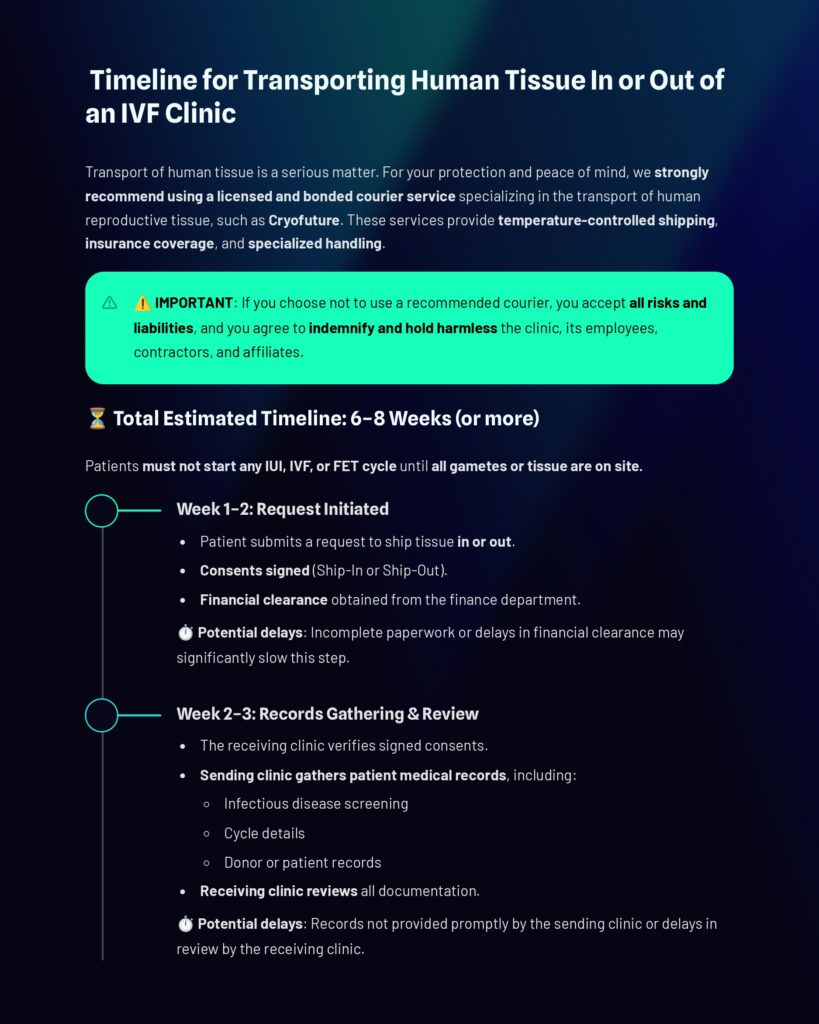
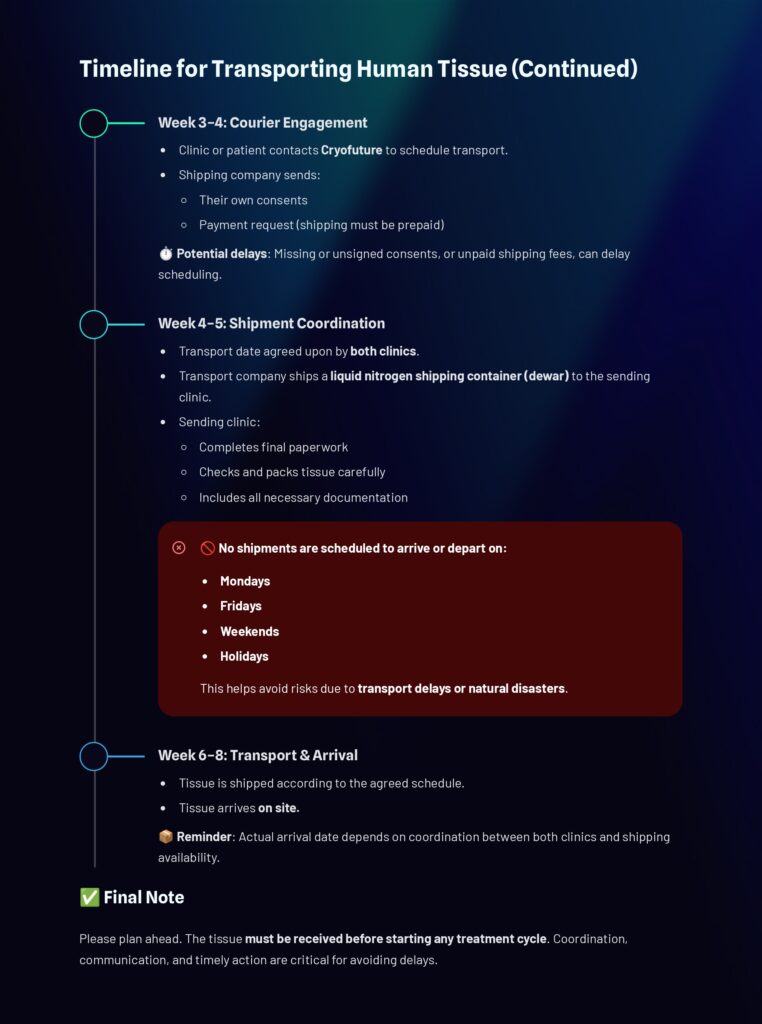
IVF Clinics take the safe transport of reproductive tissue seriously—for our patients’ protection and peace of mind.
Whether you’re coordinating a ship-in or ship-out, transporting embryos, eggs, or sperm requires 6–8 weeks and careful planning across multiple steps.
We’ve created a clear, patient-friendly infographic to guide your team and your patients through the entire process—from signing consents to confirming tissue arrival.
 Featuring recommended couriers (Cryofuture)
Step-by-step timeline
Critical reminders to avoid delays
Final note: Tissue must be on-site before any IUI, IVF, or FET cycle begins
 Download and share with your staff and patients to ensure a seamless experience.
On World Embryologist Day, we recognize the silent guardians of early human development—embryologists—
The IVF laboratory is not just a workplace; it is a living, breathing ecosystem—delicately balanced, highly sensitive, and deeply complex. Embryologists are its caretakers. When everything goes right, they remain invisible. But when success rates falter, the microscope turns inward—on them, their tools, their decisions, and the entire microenvironment they manage.
The Complexity of IVF Laboratory Systems
The culture system in an IVF lab depends on a constellation of interdependent variables: temperature, gas flow, media composition, embryo handling, light exposure, consumables, and air quality. Each detail can make or break a patient’s chance at success. This is why embryologists must be more than technicians—they must be scientists, detectives, and engineers rolled into one.
Recognizing When Something’s Wrong
Embryologists are often the first to notice subtle patterns: a reduced blastulation rate here, a lower-than-expected fertilization rate there. These aren’t just statistics—they’re signals. Signals that trigger urgent, comprehensive reviews. Because even one failed cycle carries emotional and financial weight for patients. And for embryologists, each failure feels deeply personal.
The Pressure of Root Cause Analysis
When success metrics drop, embryologists initiate a process many industries call Root Cause Analysis (RCA)—a structured investigation that spans clinical protocols, patient biology, and lab systems. It’s an emotionally charged process, demanding objectivity under pressure and teamwork across disciplines. Every possibility must be evaluated—from sperm quality to CO₂ calibration.
Embryology KPIs: The Daily Pulse
Embryologists track dozens of KPIs daily: normal fertilization rates (2PN), abnormal fertilization events (1PN, 3PN), cleavage timing, blastulation progression, embryo morphology, and even PGT results. These metrics are not just numbers—they are the heartbeat of the laboratory and the first indicators that something may be amiss.
Under the Microscope: Patient Biology and Lab Systems
Is it the stimulation protocol? Sperm fragmentation? A pH fluctuation in the culture dish? A cracked incubator seal? Embryologists leave no stone unturned. They check air quality logs, incubator readouts, lot numbers of oil overlays, and even the arrangement of dishes inside the incubator.
Silent Threats: VOCs, Temperature, and Technique
The threat is often invisible. A new piece of furniture releasing formaldehyde. A micro-pause in temperature stability. Even the gentle pressure of ICSI injection that’s just a bit too forceful. Embryologists must maintain vigilance in the face of such minute but impactful variables.
The Human Element: Responsibility Beyond Reagents
On this World Embryologist Day, it’s important to recognize that behind the protocols and SOPs are real people who shoulder extraordinary responsibility. They are the first responders when a cycle fails. They revisit every action, every annotation, every decision. They carry not only scientific precision—but emotional resilience.
Constant Vigilance, Continuous Improvement
Modern IVF labs operate with internal and external QA programs, staff audits, and witnessing systems. But even the best systems rely on the eyes and minds of skilled embryologists. When trouble arises, they are the ones who synthesize clinical data, patient histories, environmental records, and their own instincts to formulate a recovery strategy.
Why Troubleshooting is a Core Embryologist Skill
Troubleshooting isn’t a separate task—it’s embedded in every action an embryologist takes. Every embryo they culture, every pipette they handle, every incubator they load—carries the weight of performance and outcome. It’s a career defined not only by successes, but by how effectively problems are identified and solved.
A Day to Honor the Invisible Architects of Life
Today, we thank embryologists not just for the miracle of life they help create, but for the integrity, precision, and care with which they troubleshoot, adapt, and recover. The IVF lab is a high-stakes environment where even minor misalignments can derail hope. Embryologists are the ones who ensure that doesn’t happen.
So here’s to the embryologists—the unseen hands behind life, the calm in the face of chaos, the quiet force ensuring science meets success. You carry more than samples. You carry the trust of thousands. Happy World Embryologist Day July 25, 2025.
Oocyte Maturation
In Vitro Maturation (IVM) was developed as an alternative to traditional IVF due to the adverse outcomes of ovarian hyperstimulation syndrome and the costs
associated with the administration of FSH. The treatment also has the potential to overcome other causes of infertility such as male factor, gamete donation and poor response to stimulation, and also has profound benefits for women undergoing oocyte or embryo cryopreservation with an estrogen-sensitive tumor or with a prothrombotic medical condition. IVM consists of collecting immature (ie. Geminal Vesicle or GV) oocytes and applying FSH and HCG in the culture media.
In vitro maturation of immature oocytes from an unstimulated cycle is an emerging technology. One of the safest ways to prevent OHSS is to not stimulate the ovaries. During an in vitro maturation of oocytes cycle, the immature eggs are retrieved from ovaries that are barely stimulated or completely unstimulated. The eggs are maturated in defined culture media for 24 to 48 hours and fertilized through IVF or ICSI. 4 IVM is an experimental technique that consists of the in vitro conversion of oocytes at the GV stage to oocytes at the metaphase II stage. This technology must include nuclear and cytoplasmic maturation of the oocyte and give rise to embryos that have a developmental potential that is similar to embryos obtained from standard IVF or from spontaneously in vivo matured oocytes. A few IVM practitioners advocated for “rescue IVM” in IVF conventional settings to prevent severe OHSS. “Rescue IVM” is when the physician has come to the conclusion that a safe conventional IVF cycle cannot be done so they change the treatment direction to an IVM protocol to the cycle instead. If the aspiration happens prior to the follicle selection, then OHSS risk can be eliminated.
Though IVM shows promising results, it is not a mainstream for fertility treatment. Mainly because there are difficulties retrieving eggs from immature ovaries that are not stimulated, and a lower chance of live births compared to conventional IVF, and there is an increased rate of abnormalities in meiotic spindles and chromosomes from immature eggs.
Sperm Preparation for ART
When sperm is ejaculated it is surrounded by fluid. A typical ejaculate contains cells, debris, dead and damaged sperm, and healthy, motile sperm. Healthy sperm is critical to the success of ART procedures and so we use sperm preparation techniques to separate functional spermatozoa for IUI, IVF, and ART and for cryopreservation. In the IVF lab there are essentially 4 techniques we use commonly; Swim-up, Swim-down, Sucrose and Ficoll-400 density gradient techniques. Each lab finds that one of these techniques will yield more motile, live and normal looking sperm for their procedures.
Companies like ZyMot sell specialty devices for sperm separation that can be very expensive. The idea is that they simulate the cervical and uterine pathways that sperm must navigate to naturally fertilize an egg. By mimicking this natural selection method, sperm can be isolated without the use of chemicals or centrifugation that may damage the sperm. Instead they use microfluidic technology to isolate healthy sperm by laminar flow, which creates gradients through channels. These devices have been tested in randomized controlled trials, which is the gold standard of medical research.
Data shows that up to 25% of semen specimens from men with an undetectable burden of viral RNA (HIV particles in their blood) are HIV positive. Each semen sample must be tested because those results are not consistent. HIV is detected in some samples and not others form the same man, even when HIV is not detected in the blood. SPAR stands for special program of assisted reproduction. They have developed highly sensitive techniques to detect the viral load in semen samples viruses like HIV, CMV, and Hepatitis C, and special procedures to wash the semen samples. This allows the sperm to be used for IVF to decrease or virtually eliminate the risk of transmitting the infection. These specimens can only be used for IVF, they are not appropriate for intrauterine insemination.
ICSI was developed for men with poor sperm quality and quantity. Low sperm count, sperm motility, and abnormal morphology can be indications for ICSI. Abnormal morphology (shape of sperm) has been linked to poor fertilization. Fertilization can now be achieved for men where it previously seemed impossible. It is now used exclusively in some clinics, and it is especially important for couples who want to have their embryos genetically tested. One of the reasons why it is so widely used now, is so that the embryologists can look at the eggs and know the quality and maturation right after the egg retrieval. In conventional IVF, the egg quality and maturity is essentially a mystery because the eggs are surrounded by cells until the day after the fertilization. Fertilization rates are generally higher after ICSI compared to conventional IVF. The more embryos you have the better the chance of pregnancy!
One variation of ICSI is called “PICSI” which stands for physiological ICSI, and uses a specialized dish coated in a substance called hyaluronan. Healthy sperm are attracted to that enzyme and stick to it, they are later used to inject the egg with.
Sperm DNA Fragmentation Testing
DNA fragmentation can be caused by a variety of factors such as infection, chemotherapy, radiotherapy, smoking, drug use, or advanced age. SDF is linked to impaired fertilization, poor embryo quality, increased spontaneous abortion rates and reduced pregnancy rates after assisted reproduction. Currently, there seems to be insufficient evidence to support the routine use of SDF in male factor evaluation nevertheless the importance of DNA fragmentation in spermatozoa has been acknowledged in the latest American Urological Association (AUA) and European Association of Urology (EAU) guidelines on male infertility. Several strategies have been proposed to minimize the influence of abnormal chromatin integrity on ART outcomes. Obesity, smoking, toxins, pollutants, and Bisphenol A (BPA). They include: intake of oral antioxidants, varicocele ligation, frequent ejaculation and sperm sorting.
In vitro gametogenesis (IVG)
A new process called in vitro gametogenesis (IVG) is currently being developed, and if successful, it will completely transform the way humans think about reproduction.
The process of IVG creates sperm and egg cells in a lab from just about any adult cell. IVG uses skin or blood cells to reverse engineer a special type of cells called induced pluripotent stem cells (iPSCs). Essentially, iPSCs are adult cells that have been genetically reprogrammed into an embryonic state, meaning they have the potential to transform into any type of cell: kidney cells, muscle tissue, sperm, or eggs.
IPSCs can be used to create the necessary components for reproduction: eggs and sperm. They’re also at the forefront of all sorts of important research, including disease treatment, transplant science, and cutting-edge drug development.
In the hypothetical human IVG process, an individual would provide a skin biopsy. A lab would then reprogram those skin cells to create induced pluripotent stem cells, which would then be used to create eggs or sperm.
Today, we still need a man and a woman to make a baby. Reproduction still requires testes to make sperm and ovaries to produce eggs.
In 2016, a team of scientists at Tokyo University of Agriculture in Japan helped a female mouse successfully give birth to 26 pups, using eggs created from skin cells.
In 2018, Japanese scientists were able to generate immature human eggs, using induced pluripotent stem cells derived from human blood cells. These incomplete eggs would not be viable for fertilization, but they do represent a major step toward the development of a successful human IVG process.
Oocyte Activation
A small percentage of individuals continue to face repeated fertilization failure, even with normal sperm parameters and a good ovarian response and multiple ICSIs. Normally, when the sperm binds an egg a cascade of events occurs that results in oscillating waves of calcium ions in the egg. This is called egg activation! If this is missing or deficient in a patient it results in zygotes that arrest and cleavage stage defects. Calcium ionophores are the molecules that increase the concentration of calcium ions, and when artificially applied to an egg can activate the egg so that fertilization can occur.
A meta-analysis by Murugesu et al. (2017) included fourteen studies, and found activation with calcium ionophore increased fertilization, embryo cleavage, blastocyst and implantation rates, as well as overall clinical pregnancy rate per embryo transfer (OR=3.48) and live birth rate (OR=3.44). Calcium ionophore treatment may be especially helpful for patients with specific conditions, such as a condition called globozoospermia, which is when the sperm lacks a feature called the acrosome, or if previous, unexplained failed fertilization occurred.
https://www.fertstert.org/article/S0015-0282(17)30488-0/pdf
DHEA – de hydro epi andro sterone.
One of the hottest topics in IVF right now is the use of DHEA to rejuvenate ovarian function, because currently up to 1 in 4 IVF cycles are characterized by poor ovarian response. “Poor responders” suffer from Diminished Ovarian Reserve (DOR) resulting in fewer oocytes and decreased rates of pregnancy. Some studies claim that use of DHEA supplementation improves pregnancy chances in women with Diminished Ovarian Reserve by reducing aneuploidy—chromosome number abnormalities in embryos. DHEA, according to some reports, has been very successful in increasing the number and quality of eggs, reducing the risks of miscarriages and shortening the time to pregnancy.
Endometrial Receptivity Assays
The Endometrium must be prepared with progesterone for the embryo to implant. The typical metric is to look for a think “triple line” pattern. ERA testing determines if the endometrium is “genetically” receptive or not at the time of sampling, by analyzing a few hundred genes that get turned on or off and are known to be important for true endometrial receptivity. When your lining looks ready after but is not expressing the right genes and therefore the right proteins, your “window of implantation” is displaced. ERA testing can find your personalized window of implantation in case of displacement, and will allow a personalized timing for embryo transfer. 3 in every 10 patients have a displaced window of implantation. Use of the ERA test in one study, resulted in a 73% pregnancy rate in patients with previous implantation failure.
https://www.researchgate.net/scientific-contributions/2068756675_M_Ruiz-Alonso
Millions of babies have been born through Assisted Reproductive Technologies (ART), however, only 30% of IVF cycles succeed in a clinical pregnancy. Aside from increasing the success rate, there are other goals for continued improvement across the IVF industry; to simply get patients pregnant faster, reduce treatment dropout, or to reduce embryo wastage. Innovations in Artificial Intelligence (AI) will drive ART that is more reproducible, standardized, efficient, and less costly. Artificial intelligence and big data: Companies are using “big data” and predictive analytics to help fertility doctors recommend the best course of treatment based on what’s worked for patients with similar demographics. Others are using artificial intelligence to predict which embryo will create a viable pregnancy, instead of relying on scientist’s (occasionally) subjective judgment.
Nanotechnology helps sperm swim: Male Infertility issues contribute to about half of all cases of infertility. One major cause is low sperm motility, or the sperm’s inability to swim to the egg. Nano-tech motors can slip over a sperm’s tail to propel it next to an egg.
Creating “Three-person” embryos: The goal of so-called three-person IVF is to create embryos that have nuclear DNA from a woman and her partner but with healthy mitochondrial DNA from an egg donor. Three-person embryos have been created for two reasons, to correct inherited mitochondrial disorders or as an attempt to reverse the biological clock of older women.
Freeze all Vs. Fresh Transfer
A suggestion originated in the early 2000s that the high hormone levels derived from a stimulated IVF cycle would encourage a non-receptive, out-of-phase endometrium, the concept arose that adopting a freeze-all approach would not only minimize the risk of ovarian hyper response syndrome, but maybe even improve pregnancy rates in the general IVF population.
The latest clinical meta-analysis of fresh vs frozen transfers, now involving 5379 eligible subjects and 11 trials, found eFET associated with a higher live birth rate only in hyper-responders. There was no outcome difference between fresh and frozen in normal responders, nor in the cumulative live birth rate of the two overall groups. Now, here is where it gets complicated.
The CDC described the increase in the number of elective FET cycles between 2007 and 2016 as ‘dramatic’, rising steeply from almost zero to more than 60,000 cycles per year. In its summary of US activity for 2016 the CDC seems unequivocal – at least, based on its observational registry data – that rates of pregnancy and live birth are higher after frozen transfers than after fresh. Yet the (published, peer reviewed or randomized clinical trial) so far has not shown a large difference. It seems to be a case where the clinical trials have not caught up with clinical practice, and because there is clear evidence that for hyper responders outcomes are better, many clinics are now relying on a freeze all strategy to reduce this poor outcome.
- Devroey P, Polyzos NP, Blockeel C. An OHSS-free clinic by segmentation of IVF treatment. Hum Reprod 2011; 26: 2593–2597.
- Wong KM, Van Wely M, Mol F, et al. Fresh versus frozen embryo transfers in assisted reproduction. Cochrane Database Syst Rev. 2017 Mar 28;3:CD011184. doi: 10.1002/14651858.CD011184.pub2.
- Roque M, Haahr T, Geber S. Fresh versus elective frozen embryo transfer in IVF/ICSI cycles: a systematic review and meta-analysis of reproductive outcomes. Hum Reprod Update 2019; 25: 2-14.
- CDC. Assisted Reproductive Technology: National Summary Report. 2016.
Embryo Retained in Catheter
Thaw Biopsy Revit
Personalized Genomic Medicine
Anticoagulants; Asprin, Lovenox, Heparin
C4M2 mutation is found on the Annexin 5 which keeps the blood thin enough for pregnancy to progress successfully. When mutated, the gene fails to work adequately causing blood clotting, which eventually leads the body to abort the fetus.
Antiphospholipid syndrome (APS) is a systemic autoimmune disease characterized by production of antibodies – antiphospholipid antibodies (aPL) – that “attack” the person’s own body, resulting in blood clots and/or pregnancy complications.
For APS patients with a history of pregnancy complications only:
oral low-dose aspirin (LDA), which prevents clots by blocking platelet aggregation.
subcutaneous injections of prophylactic, low-dose heparin (an anticoagulant drug that prevents the clotting ability of the blood).
- Prevents the formation of blood clots in the embryo and placenta
- Increases the production of cellular substances important to successful embryo implantation in the uterine lining
- Increases insulin-like growth at the site of the embryo’s implantation
- Increases production of protein assisting in binding the early embryo in the uterine lining
- Effects suppression on the immunologic cause of recurrent miscarriage
- https://www.ebiomedicine.com/article/S2352-3964(16)30280-8/fulltext
MTHFR
People differ in how much folate or folic acid they need for their health – based on the activity of “the MTHFR gene”. A mutation in this gene causes very low activity of the MTHFR protein in the body. This results into a highly reduced ability of the body to convert folic acid into a usable form and can lead to accumulation of the amino acid homocysteine – which is toxic to the body.
The biggest reason why knowing your MTHFR gene result is because it is involved in creating healthy DNA for both you and your future child. Active folate is directly involved in the synthesis of new DNA. And while we have a constant demand for the production of new and healthy DNA, you can imagine that demand for this hugely increases during pregnancy, when you are growing a new life!
Issues with not enough healthy DNA available for both mother and growing child can result in issues with pregnancy, fetal growth, and general childhood development.
It is also used by the body to prevent levels of a substance in the body called homocysteine from climbing too high, which can be related to blood clots and increased risk of blot clot formation during pregnancy.
It is also important to create molecules called ‘methyl groups’, which act as instruction manuals for your DNA and cells, telling them the correct way to ‘behave’, so they do not do anything unwanted (e.g. cause disease or dysfunction within the body). We need healthy levels of these methyl groups to methylate/instruct your DNA, and without it cells are uncontrolled and can start to cause problems.
Formation of red blood cells, white blood cells, and platelets, which are all vital for both the health of the mother during pregnancy and also for the health of the child during pregnancy and after birth as they begin to rapidly grow and come into contact with bacteria and pathogens to strengthen their immune system.
As you can see, addressing and supporting your MTHFR genes during your preconception phase is the best way to healthily support both your body once you fall pregnant, and the growth and development of your new baby.
Knowing your MTHFR gene result and supporting your folate levels where needed is a key step in preconception, and both should not be undervalued!
As couples navigate through their fertility journey, you will meet with your physician and begin the process for IVF that includes preparation, stimulation, and monitoring.
In the background is the functioning of the IVF laboratory, where what is actually occurring can be a bit of a mystery. It is after all an almost literal black box! A windowless lab that is under strict lock and key and is often a dark, warm humid atmosphere, just like a human fallopian tube which is the site of fertilization inside the body.
The scientist who combines the sperm and egg and helps the resulting embryos to grow in a controlled environment is called an embryologist. Access to the laboratory or embryologists in most clinics is limited.
An embryologist is a fertility specialist that helps to create embryos to either be used in IVF right away or to be frozen for later use. Embryologists aren’t MDs, but we are highly trained medical professionals, usually holding a Masters degree or a PhD due to the specialized nature of our work. Here are ten things we want you to know about IVF!
What is a blastocyst and why is embryo grading relevant?
A blastocyst describes an embryo stage reached usually after about five days of development post-fertilization. It has about 50-150 cells and has started to develop specific regions with different cellular destinies. The blastocyst is working hard; pumping fluids towards its center, creating a fluid-filled center and expanding like a water filled balloon.
Embryo grading is when embryologists grade embryos based on their potential to successfully implant and result in a pregnancy. The criteria varies from clinic to clinic but the goal is always the same-transfer the best embryo!
Embryologists have lots of training in grading embryos and make the best decision they can for you and your embaby! But it’s always possible that things might actually not go as planned. Sometimes an embryo with a lower grade implants successfully and vice versa! Even though science is very logical and precise, that doesn’t mean that there can’t be some surprising ups and downs.
Why are there so many unknowns about “IVF Add-Ons like EmbryoGlue, PGT-A, Assisted Hatching etc?
In my opinion, this is the result of thirty years of political turmoil in the US. research on embryos and IVF has largely been driven out of the public sphere and into the private sector, entirely supported by commercial interests and individual clinics.
A lot of embryos look amazing on Day 3, but do not go on to form blastocysts. Why?
Embryonic gene activation (EGA) is the process by which an embryo begins to transcribe its newly formed genome. Sperm play an essential role in embryonic genome activation and embryonic progression to blastocyst. Embryos often “arrest” at this stage.
All About PGT?
For those new to the terminology, PGT is a genetic test that takes place before embryo transfer, designed to tell you if each embryo is chromosomally healthy. An embryo that is euploid (normal) has 23 pairs of chromosomes and has a better chance at leading to a successful live-birth than an abnormal (aneuploid) embryo.
Aneuploid embryos have missing or extra chromosomes and will typically fail to implant, result in a miscarriage, or lead to the birth of a child with a chromosomal disease. Aneuploidy (abnormal or incorrect chromosome number) is common in humans and is the leading cause of all human birth defects as well as miscarriage. We can perform up to three types of preimplantation genetic testing on embryos during the IVF process. Those include:
PGT-A, which screens for an abnormal number of chromosomes.
PGT–M is the test for individual, or monogenic, diseases.
PGT-SR tests for abnormal chromosomal structural rearrangements, like translocation or inversion.
PGT begins with a biopsy of an embryo in the blastocyst stage of development, usually on day 5 or 6 of embryo development. The biopsy removes 3 to 10 cells from the trophectoderm, which is the outer layer of cells that will become the placenta as the embryo develops. The biopsy does not remove any cells from the inner cell mass, which develops into the fetus.
After these cells are removed, the blastocyst is frozen and stored in the lab.
The biopsied cells are sent for laboratory testing. Results are typically returned in a week to 10 days following the biopsy.
Besides the two possible PGT results we’ve already talked about– euploid and aneuploid– there are also two others: mosaic and inconclusive.
A mosaic embryo consists of both euploid and aneuploid cells. While mosaicism has existed all along, PGT has only been able to recognize mosaicism in embryos within the past three years, so there is still a lot of research ongoing about their potential. What we know now is that about 10-15% of all embryos are mosaic.
Embryo biopsy can also yield an “inconclusive’ or “No result”. That means that the trophectoderm biopsy sample was insufficient to be used for PGT or that it did not meet the quality control standards for analysis.
A study by Cimadomo et al. (2018) showed that inconclusive results occur about 1.5-5% of the time because the cell sample is not loaded properly and the tube is actually empty, or that the sample was degraded.
Inconclusive or no result embryos have a good chance of being “normal”. A large study (Demko et al., 2016) found for women <35 there is about a 60% chance of a blastocyst being euploid (normal) to 30% by age 41. The chance of getting NO euploid (normal) embryos was about 10% for <35 and about 50% by 43.
You have to make a LOT of eggs to have a good cycle.
15 is the optimal number of eggs to retrieve without putting you at risk for OHSS. More eggs often means they are lower quality and higher estrogen levels, which can impair implantation in fresh IVF Cycles.
IVF has a 100% success rate.
The success rate of IVF is about 40% in couples below the age of 35. Also, the success rate of IVF depends on factors such as age, cause of infertility, and biological and hormonal conditions.
IVF is the same thing no matter which clinic you go to.
NOPE! Not all fertility clinics are created equal, so it’s important to do your research to help you make an informed decision. In addition to looking for a clinic with highly-qualified fertility doctors, it’s critical to choose a clinic with a superior IVF lab. You can check out a clinic’s success rates at Society of Assisted Reproductive Technology or the Centers for Disease Control and Prevention website.
Infertility is a female problem.
Most of the practical and emotional infertility support out there is aimed at women. Maybe because we are the ones being stimmed and undergoing the surgeries. But we need to get the men more involved! It’s a common misconception that women are most affected by infertility. In some cultures “male infertility” is literally unheard of, like culturally it does not exist. In fact, men and women are equally affected. In heterosexual couples, 1/3 of infertility cases are attributed to men, 1/3 to women, and 1/3 are unknown. With regard to our healthcare, often we will be the first to approach an infertility doctor, who will then prescribe a standard work up of invasive tests that have become the norm for women who experience problems conceiving: that includes multiple appointments, multiple hormone tests, internal, transvaginal scans to check your womb for fibroids, and an HSG test, where dye is pushed into your fallopian tubes to see if they were blocked. Only then, does the male partner typically obtain a semen analysis. Sometimes, men may need to modify their lifestyle habits quite a bit, but this is often brought up late, if at all. Some providers argue that assessing lifestyle factors and history, or for physical problems like varicocele, is even more important than the traditional semen analysis. Raising awareness male infertility will help us to get more funding, resources, research, and even donations made by male donors.
IVF is only used for individuals/couples struggling with infertility.
Families with a history of genetic disorders can do IVF with pre-implantation genetic testing to screen their embryos for single gene disorders and to prevent the genetic condition from being passed onto their children. Even fertile couples use IVF to have more control over their family building, such as being able to chose the order of the sex of their children or for optimal timing for their lives and careers. Also, IVF is used by moms and dads who are single by choice and for LGBTQ couples to build their families.
EGG, Sperm and Embryo Myths!
We cannot tell “female” (X- bearing) sperm from male (Y-bearing) sperm. There is a persistent myth that X or Y bearing sperm look different from each other or swim at different rates. These myths are not based on good, solid science!
Every egg, sperm and the resulting combination of the two are different. That makes every attempt at IVF using different gametes a different experience. From the embryologist’s point of view, each egg looks different, but we can’t see the DNA with a microscope to select the “good” eggs. Embryologists will care and nurture your gametes, but cannot repair or make an embryo better by culturing it in the laboratory.
Some embryos don’t freeze well or survive the thaw, and are just indicators that there is probably something flawed about them or something we don’t yet understand scientifically speaking. Additionally, each embryo is as different as any child resulting from that embryo would be, but we can’t treat each embryo differently. Adhering strictly to IVF lab culture protocols is what elevated assistant reproductive technologies from being an art into being a reproducible science.
A suggestion originated in the early 2000s that the high hormone levels derived from a stimulated IVF cycle would encourage a non-receptive, out-of-phase endometrium, the concept arose that adopting a freeze-all approach would not only minimize the risk of ovarian hyper response syndrome, but maybe even improve pregnancy rates in the general IVF population.
The latest clinical meta-analysis of fresh vs frozen transfers, now involving 5379 eligible subjects and 11 trials, found eFET associated with a higher live birth rate only in hyper-responders. There was no outcome difference between fresh and frozen in normal responders, nor in the cumulative live birth rate of the two overall groups. Now, here is where it gets complicated.
The CDC described the increase in the number of elective FET cycles between 2007 and 2016 as ‘dramatic’, rising steeply from almost zero to more than 60,000 cycles per year. In its summary of US activity for 2016 the CDC seems unequivocal – at least, based on its observational registry data – that rates of pregnancy and live birth are higher after frozen transfers than after fresh. Yet the (published, peer reviewed or randomized clinical trial) so far has not shown a large difference. It seems to be a case where the clinical trials have not caught up with clinical practice, and because there is clear evidence that for hyper responders outcomes are better, many clinics are now relying on a freeze all strategy to reduce this poor outcome.
Don’t choose your clinic based solely on insurance coverage. Base your decision on the performance of the individual clinic. Clinics that have higher volumes will naturally have embryologists who get to participate in a lot of procedures. Fertilization rates should be above 70% and 40-50% of fertilized eggs should make it to the blastocyst stage.
Weigh the cost of the treatments with the CDC success rates. Good clinics with high success rates may cost more up front but may get you pregnant faster and at a lower cost in the long run instead of paying for multiple treatments.
Consider inquiring about the technologies the clinic uses. Do they use an EMR? Does it have a patient Portal for easy communication? Is there an electronic consenting process? Does the lab have state of the art cryo-storage monitoring systems? Does the lab use “electronic witnessing”?
How do you choose a fertility clinic? What questions can a lay person ask to begin to understand the quality of an IVF Lab? Quality goes beyond pregnancy success rates to new technologies, inspections and accreditations, staff experience and more! Find out what to ask.
In the industry, we alway say, START with SART! The federal government requires fertility clinics to report IVF treatment cycle success rates, and you can find those statistics on the SART website. It also has a tool that allows prospective patients to search for fertility clinics by ZIP code, state or region; plus, women can plug in information such as their age, height, weight, and how many prior births they’ve had to predict their chances of success with assisted reproductive technology.
Most IVF programs are proud of their results and may list them on their website, however, whatever they are advertising should match the number of cycles and the outcomes reported to SART or found in the CDC Assisted Reproductive Technology Fertility Clinic Success Rates Report.
Look for verified lab accreditation on the CDC report or in the actual facility itself, it will usually be posted in plain site. Find out who the inspecting agency is, the College of American Pathologists? The Joint Commission?
A possible thing to note could be to look at what percentage of their patients are in your age range, or have the same infertility diagnosis as you do.
Consider how the clinic’s staff talk to you, what they say – how professional does the care feel? Use all of your senses. Is the care personalized and professional enough so you feel comfortable?” An example of dehumanizing behavior: some clinics have an application process to decide if you should be treated there.
- Failed to call in prescriptions to pharmacy
- Lost paperwork
- Lost appointments
- Failed to call with results
- Failed to order appropriate test
Look on Indeed, Glassdoor, or other job sites to get an idea of staff turn over and what staff have to say. Find out how experienced the providers are, how well-trained they are and how long have they been there? As with other fields of medicine, experience matters in reproductive medicine. Providers should be fellowship-trained and board-certified in the field, both of which are the standard. Also inquire how long the medical providers have been at the facility. If there seems to be high staff turnover, there could be leadership and organizational issues at the clinic.
Look for clinics that can offer the latest treatments and protocols. These might include blastocyst transfer, freeze all cycles, mini or low STIM IVF, preimplantation genetic screening of embryos and single embryo transfer, ERA or endometrial receptivity assay testing.
In the ever-evolving world of IVF lab accreditation and quality management, there are numerous standards and frameworks to choose from, such as from ASRM and ESHRE. However, there’s one accreditation agency that stands out as the optimal choice – the College of American Pathologists (CAP). If you’ve just stumbled upon CAP Accreditation, don’t fret; this comprehensive guide will walk you through the ins and outs, helping you determine if CAP Accreditation is right for your lab and, if so, how to embark on the journey toward excellence.
What is CAP IVF Lab Accreditation?
The CAP Checklist for IVF lab accreditation is a remarkable publication brought to you by the College of American Pathologists. It is more than just a checklist; it’s a meticulously detailed roadmap designed to ensure and enhance quality management in clinical embryology, andrology, and endocrinology labs. Specifically, these standards are meticulously crafted to align with and uphold the USA federal CLIA88 guidelines for clinical laboratories.
Who Needs CAP Accreditation?
CLIA88 isn’t just a suggestion; it’s a legally mandated framework. By law, every clinical laboratory must be in strict compliance with CLIA 88. But what sets CAP Accreditation apart is its capacity to not only meet but exceed these standards. So, whether you’re running an established IVF lab or venturing into this cutting-edge field for the first time, CAP Accreditation is your key to unlocking a world of quality, precision, and excellence.
Staying Ahead of the Curve with CAP Checklist Updates
The College of American Pathologists understands the importance of maintaining consistency and stability in their checklists. While the world of IVF lab accreditation is dynamic, CAP strives not to make major changes to the checklists. This dedication to stability allows IVF labs to maintain their focus on quality assurance without the constant disruption of adapting to significant updates.
For IVF labs, this commitment to minimizing major changes in the checklists is a relief. It allows you to build a strong foundation of quality practices and focus on continuous improvement rather than navigating extensive checklist revisions.
To help you stay informed and up-to-date, we’ve still analyzed the minor changes in recent CAP Checklist updates and compiled them into a convenient reference table for your convenience.
CAP Checklist Update Key Changes & Updates
| Previous | Current | |
| GEN.41304 | Patient Data Accessibility | Patient Data Accessibility |
| There is a written policy to ensure that patient data are accessible in a timely manner only to those individuals who are authorized to review test results.
NOTE: Only those healthcare personnel authorized to review a patient’s test results should have access to those results. Laboratories subject to US regulations must provide final test results to the patient or the patient’s personal representative upon request. For completed tests, these results must generally be provided no later than 30 days after such a request. Under the HIPAA Privacy Rule, only the patient or a personal representative, defined as an individual who has authority under applicable law to make health care decisions for the patient, can be given access to a patient’s personal health data. Laboratories must take reasonable steps to verify the identity of the patient and the authority of a personal representative to have access to an individual’s protected health information. The Rule also allows for the release of test reports to authorized persons responsible for using the test reports and to the laboratory that initially requested the test, if applicable. For additional information see Department of Health and Human Services, Medicare and Medicaid Services, “CLIA Program and HIPAA Privacy Rule; Patients’ Access to Test Reports; Final Rule.” Fed Reg 79:7290 (2014); 45CFR164.502(g); 45CFR164.514. |
The laboratory ensures that patient data are accessible in a timely manner only to those individuals who are authorized to review test results.
NOTE: Only those healthcare personnel authorized to review a patient’s test results should have access to those results. Laboratories subject to US regulations must provide final test results to the patient or the patient’s personal representative upon request. For completed tests, these results must generally be provided no later than 30 days after such a request. Laboratories must also comply with other federal and state laws on patient access to laboratory and pathology results. Under the CLIA Program and HIPAA Privacy Rule, Patients’ Access to Test Reports, only the patient or a personal representative, defined as an individual who has authority under applicable law to make health care decisions for the patient, can be given access to a patient’s personal health data. Laboratories must take reasonable steps to verify the identity of the patient and the authority of a personal representative before granting access to an individual’s protected health information. The Rule also allows for the release of test reports to authorized persons responsible for using the test reports and to the laboratory that initially requested the test, if applicable. |
|
| GEN.61300 | Climate Control | Climate Control |
| The room temperature and humidity are adequately controlled in all seasons.
Evidence of Compliance:
|
The room temperature and humidity are adequately controlled in all seasons.
NOTE: Laboratories must follow manufacturer’s instructions for temperature and humidity for proper functioning of instruments, equipment, and test systems. Evidence of Compliance:
|
|
| GEN.73400 | Safe Work Practices Review | Safe Work Practices Review |
| There are records of periodic review (at least annually) of safe work practices to reduce hazards.
NOTE: Review must include bloodborne hazard control and chemical hygiene. If the review identifies a problem, the laboratory must investigate the cause and consider if modifications are needed to the safety policies and procedures to prevent reoccurrence of the problem or mitigate potential risk. Evidence of Compliance:
|
The laboratory evaluates safe work practices at least annually to identify hazards, investigate problems, and take actions to prevent recurrence or mitigate potential risks, as appropriate.
NOTE: Review must include assessment of work practices for infection control (eg, bloodborne pathogens, highly infectious pathogens), fire prevention and control, electrical safety, chemical safety, radiation safety, personnel and patient security incidents, and environmental safety. Appropriate risk assessment processes must include the following steps, as applicable:
Evidence of Compliance:
|
|
| GEN.76400 | Chemical Hazard Emergencies | Chemical Hazard Emergencies |
| Explicit instructions are posted, and appropriate supplies available, for the emergency treatment of chemical splashes and injuries and the control of chemical spills wherever major chemical hazards exist.
NOTE: Spill kits must be handled in accordance with manufacturer’s instructions. If no expiration date is assigned, the spill kit must indicate the date it was put into service and the laboratory director or designee must periodically assess its usability. |
Explicit instructions are posted, and appropriate supplies available, for the emergency treatment of chemical splashes and injuries and the control of chemical spills wherever major chemical hazards exist.
NOTE: Spill kits must be handled in accordance with manufacturer’s instructions. If no expiration date is assigned, the spill kit must indicate the date it was put into service and the laboratory director or designee must assess its usability at least annually. |
|
| GEN.73800 | Emergency Preparedness and Response | Emergency Preparedness and Response |
| There are written policies and procedures defining the role and responsibilities of the laboratory in emergency preparedness for harmful or destructive events or disasters.
NOTE: The specific elements to be included in the emergency preparedness plan must be based on a risk assessment using an “all-hazards” approach to evaluate the types of hazards most likely to occur that would potentially disrupt services. Written policies and procedures must be developed to support the execution of the laboratory’s emergency response plan and the path of workflow, including a communication plan. Laboratories located within a healthcare facility or integrated health system may participate in development of a facility or system-wide emergency preparedness plan rather than an individual laboratory plan, but must ensure that policies and procedures for the plan are clearly defined and address the relevant site-specific risks. Examples of events that may be addressed in the emergency preparedness plan include situations such as unexpected system failures (eg, HVAC, water, communication, computer system), power failures, natural disasters (eg, tornado, hurricane, earthquake, fire, flood), emerging public health threats, cyber-attacks, terrorist events, or workplace violence. |
NOTE: The specific elements to be included in the emergency preparedness and response plan must be based on a risk assessment using an “all-hazards” approach to evaluate the types of hazards most likely to occur that would potentially disrupt services. The laboratory’s emergency preparedness and response plan must include processes for initiating, managing, and terminating the response, as well as recovery phases.
Written policies and procedures must be developed to support the execution of the laboratory’s emergency response plan and the path of workflow, including a communication plan. Laboratories located within a healthcare facility or integrated health system may participate in development of a facility or system-wide emergency preparedness plan rather than an individual laboratory plan, but must ensure that policies and procedures for the plan are clearly defined and address the relevant site-specific risks. Examples of events that may be addressed in the emergency preparedness plan include situations such as unexpected system failures (eg, HVAC, water, communication, computer system), power failures, natural disasters (eg, tornado, hurricane, earthquake, fire, flood), emerging public health threats (eg, increased numbers of potentially infectious patients or patient specimens), cyber-attacks, terrorist events, or workplace violence. |
|
| GEN.76710 | A properly functioning fume hood (or chemical filtration unit) is available for any procedures using volatile chemicals. | |
| COM.30695 | Biological Safety Cabinet | |
| A certified biological safety cabinet (BSC) is available and used when appropriate.
NOTE: The biological safety cabinet must be certified when installed, whenever moved, and at least annually to ensure that filters are functioning properly and that airflow rates meet specifications. A BSC is used when protection of personnel, product, and/or the environment is needed for certain types of testing or procedures, including:
The laboratory director is responsible for ensuring a risk assessment is conducted, and for defining and implementing work practice controls to minimize identified risks, including installation and proper use of the appropriate type of biological safety cabinet. The 6th edition of Biosafety in Microbiological and Biomedical Laboratories provides guidance for safe conduct of work from a biosafety perspective. It can be used as a tool for assessing and mitigating risk. Refer to Section II – Biological Risk Assessment, Appendix N – Clinical Laboratories, Section IV – Laboratory Biosafety Level Criteria and Table 1. Summary of Laboratory Biosafety Levels (BSLs) for specific information. Evidence of Compliance:
|
||
| RLM.03953 | Alarm Response Plan and Records | Alarm Response Plan and Records |
| The laboratory follows a well-defined, written plan for responding to alarms during work and non-work hours and retains records of alarm responses.
NOTE: The laboratory must be able to demonstrate that the response plan ensures timely response to both audible (in laboratory) and remote alarms. Personal responsible for responding to alarms must be trained to follow written procedures to correct the problem or take alternative measures. Records retained for alarm response must include:
If an alarm response involves the loss of reproductive cells or tissues due to a failure in storage conditions, the laboratory must conduct a root cause analysis (refer to GEN.20310) and implement appropriate risk-reduction strategies. Evidence of Compliance:
|
||
| DRA.10475 | Director Responsibility – New Method Validation/Verification | Director Responsibility – New Method Validation/Verification |
| The laboratory director ensures that the performance specifications for new tests, instruments, and methods introduced to the laboratory have been properly validated or verified prior to being used for patient testing.
NOTE: Specific requirements are in the All Common Checklist (Instruments & Equipment, Test Method Validation/Verification, and Method Performance Specifications sections) and in other checklists. Evidence of Compliance:
|
The laboratory director ensures that the performance specifications for new tests, instruments, and methods introduced to the laboratory have been properly validated or verified prior to being used for patient testing.
NOTE: Specific requirements are in the All Common Checklist (Instruments & Equipment, Test Method Validation/Verification, and Method Performance Specifications sections) and in other checklists. Artificial intelligence and machine learning algorithms implemented by the laboratory for patient testing are subject to this requirement. Evidence of Compliance:
|
|
As a reminder, if you’re looking for a “Turn Key” set of IVF lab Standard Operating Procedures (SOPs), you can find them within the ART Compass IVF Lab Management platform. These SOPs are designed to seamlessly integrate with the latest CAP Checklist updates, making your journey toward CAP Accreditation smoother and more efficient.
Stay with us as we continue to unravel the secrets of CAP IVF Lab Accreditation, equipping you with the knowledge and insights needed to not only meet industry standards but to stand out as a beacon of excellence in the field of IVF.